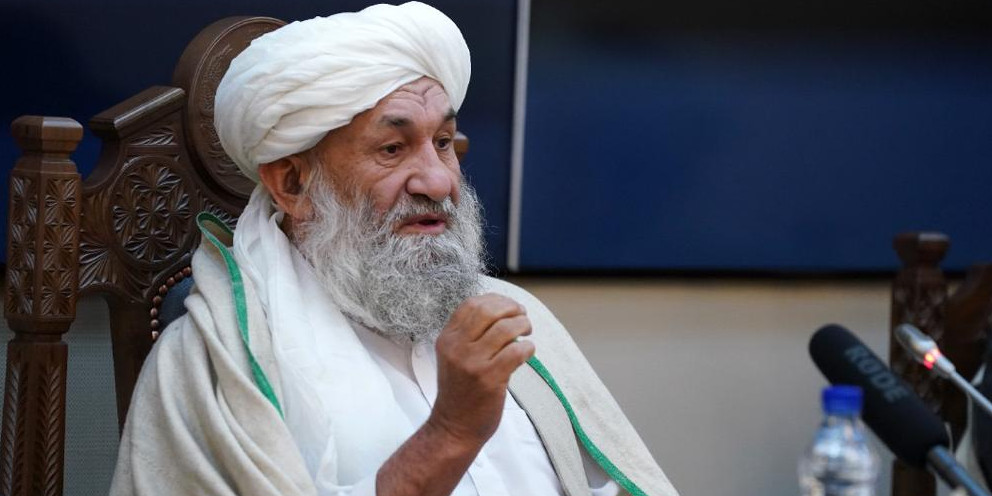
H.E. Mawlawi Abdul Salam Hanafi, Deputy Prime Minister for Administrative Affairs of the Islamic Emirate of Afghanistan, attended and delivered a speech this morning at the inauguration ceremony of the 22.75-megawatt Naghlu solar power project, which has been completed by Da Afghanistan Breshna Sherkat (DABS).
At the beginning of the ceremony, the Deputy Prime Minister expressed his gratitude to all those involved in DABS and the project’s implementing companies, particularly Turkey’s Construction Company 77 and the domestic firm Zulristan, for their efforts in completing this major project.
H.E. Mawlawi Abdul Salam Hanafi highlighted that electricity is one of humanity’s most essential needs and a fundamental infrastructure for development in the modern world. He noted that until a few years ago, Afghanistan produced only about 200 megawatts of electricity. However, following the establishment of the Islamic Emirate and through the dedicated efforts of the Ministry of Energy and Water and DABS leadership, investments have now been made to increase domestic electricity production to over 1,200 megawatts.
He added that serious efforts are underway to expand transmission capacity, and once the 500-kV lines from Uzbekistan and Turkmenistan are connected, Kabul and other provinces will have continuous, 24-hour electricity supply.
The Deputy Prime Minister further stated that Afghanistan possesses abundant resources for electricity generation, including hydropower, solar, wind, coal and gas, waste or biomass, and geothermal energy, with the potential to produce thousands of megawatts.
In conclusion, H.E. Mawlawi Abdul Salam Hanafi urged all citizens to use electricity responsibly and avoid wastage.
It is noteworthy that the work on the Naghlu solar power project began last year and was completed within fourteen months. The project has a production capacity of 22.75 megawatts, providing electricity to more than 23,000 families.